
Most conversations about energy in the age of AI focus on supply and demand. How many gigawatts data centers will require. How fast solar, nuclear, or gas can scale. The needs of robotics and the re-shoring of manufacturing. Whether electricity demand will double or triple.
This framing is fundamentally misplaced: we are not suffering from a lack of energy supply, but a Coordination crisis. Cheap power exists, but projects wait years to connect. Renewables are curtailed, even as prices rise. Large loads increasingly build off-grid despite abundant generation potential. These are not the symptoms of an energy shortage.
The question is no longer “can we generate enough electrons?” It is “can we align where and when electrons are produced with where and when they are needed?”
Why centralized grids used to work
For most of the last century, centralized grids have been an excellent solution. They coordinated a small number of large generators, served predictable human demand, and operated on long planning cycles. Prices were coarse. Dispatch was centralized. Change was slow.
Under these assumptions, centralized coordination worked well. It was simpler to forecast demand, amortize infrastructure, and recover costs through regulated tariffs. Complexity was limited and manageable, and the system was optimized for the world that existed.
AI as a coordination shock
AI breaks those assumptions, not only by increasing electricity demand, but by changing where and when demand appears. Loads become harder to place and time, even if they operate as steady baseload once online. Demand is machine-driven rather than human-driven, governed by utilization targets, latency constraints, and model economics. Training clusters, inference hubs, and edge deployments impose tight locality and reliability requirements. Power must exist in the right place at the right moment, or compute capacity is underutilized.
The failure mode shows up most clearly in interconnection. In the US, over 2,000 gigawatts of proposed capacity sits stranded in interconnection queues, leading to five-year queues. Transmission and distribution costs rise even as generation costs fall. Large customers self-supply or build off-grid, not because grid power is unavailable, but because it is unavailable in time. This is not a failure to invent power plants. It is a failure to synchronize them.
Solar and storage unlock abundance, but stress the system
Solar plus storage has crossed an important threshold. After years of costs declining roughly 20-40% per doubling of deployed capacity, in many regions, solar plus storage is now cheaper than operating existing natural gas, even before subsidies.
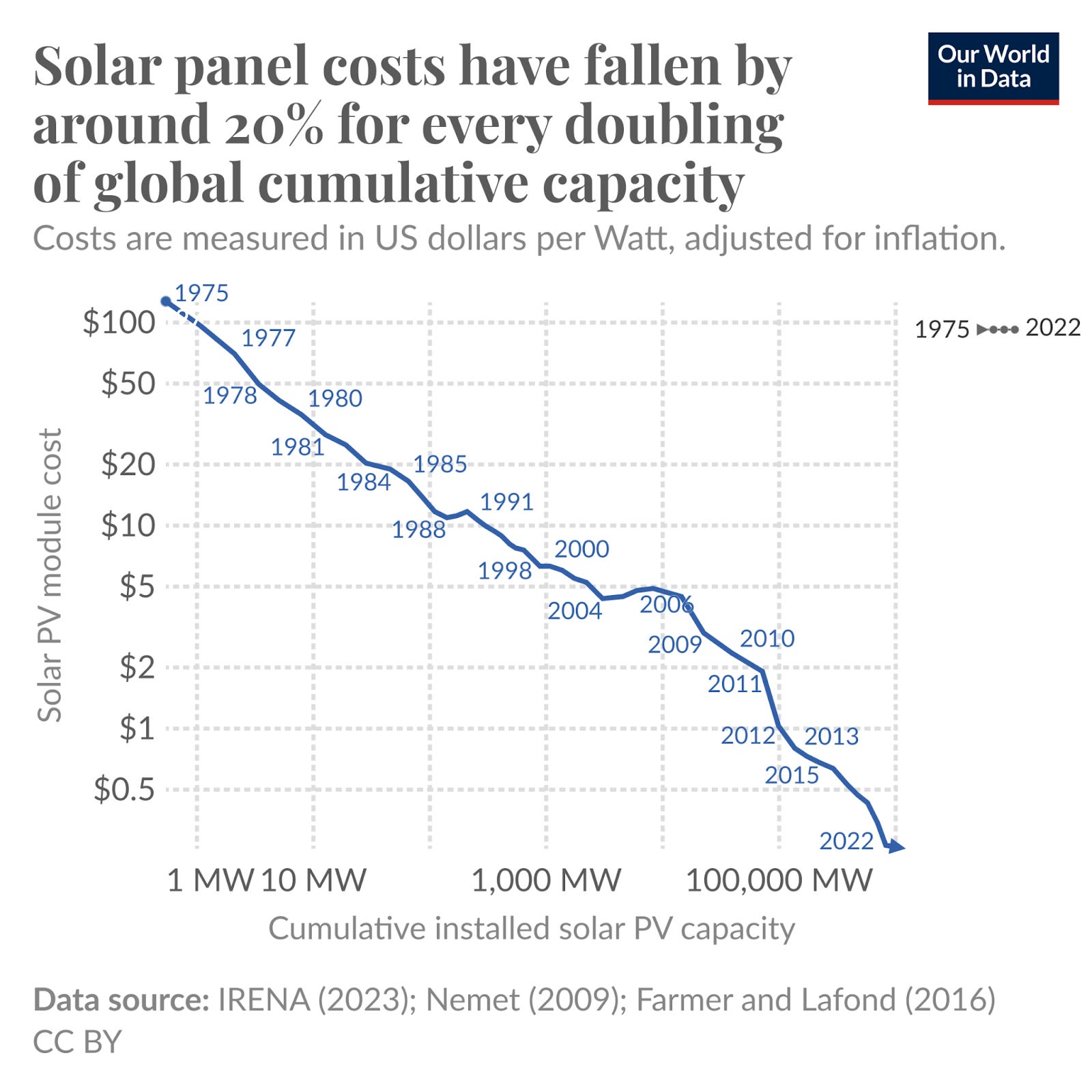
From a technological and economic perspective, energy abundance is no longer speculative. And yet, curtailment is rising. In California and Texas, for example, renewable generation is regularly curtailed or delayed, even as electricity prices increase. Power exists, but the system cannot absorb, route, or contract for it in time.
This is the paradox of energy abundance when it comes in a modular, distributed form. Solar plus storage pushes generation to the edge, allows power to shift across hours rather than seasons, and multiplies the number of producers by orders of magnitude.
Coordination as the scarce resource
Centralized systems struggle with this growing coordination complexity, driven by distributed generation, machine-driven demand, and rapid system change, and are unable to coordinate resources. Transmission and distribution (T&D) costs rise even as generation costs fall. A decade ago, roughly 70% of an electricity bill was paid for generation; that split is now approaching 50/50, and is expected to hit 34/66 by 2029.
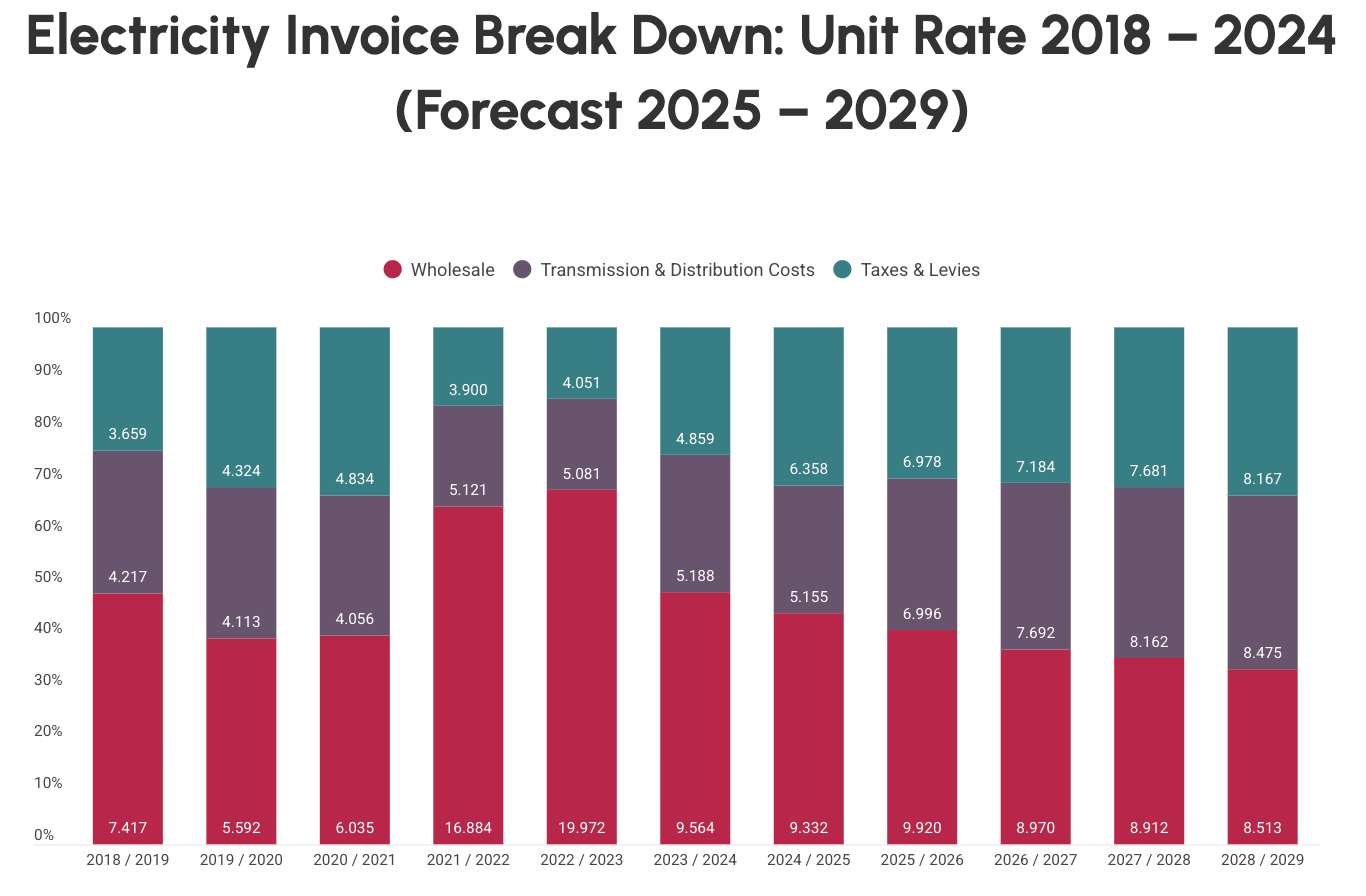
Consumers are paying less for electrons and more for the system that moves and manages them. The grid has become a coordination tax. Coordination, not generation, is now the scarce resource:
Synchronizing supply and demand in real time
Routing power locally without multi-year planning cycles
Pricing electricity granularly across space and time
Aligning incentives across millions of independent actors
When coordination fails, abundance looks like scarcity. Infrastructure exists, but cannot be accessed. Power is cheap, but unavailable when and where it matters.
Why decentralization is a requirement
This is where decentralization enters, meaning coordination and financing move from a few centralized institutions to many distributed participants, all responding to real-time signals rather than static tariffs and multi-year planning cycles.
The future energy system will look less like a centrally planned machine and more like a network that coordinates itself. In practice, this shows up as microgrids, flexible loads, local storage, real-time pricing, and aggregation layers such as virtual power plants, which scale better and can respond in minutes rather than years.
Decentralization also has a financial dimension. Distributed energy is modular and scalable, but capital formation and deal plumbing are not. When energy assets and their cash flows become legible and programmable (for example, power subscriptions, virtual power plant revenues, or long-term offtake contracts), more granular financing becomes possible: micro-payments, collateralized credit, and portfolio-level securitization, and eventually programmable capital markets that can fund and coordinate deployment globally. Daylight’s DayFi is an early example, using onchain vaults and stablecoin liquidity to finance distributed solar and storage and distribute yield from their cash flows.
Decentralization is not about eliminating grids. It is about decomposing coordination and capital allocation into units that are small, fast, and adaptable enough to scale, so energy abundance can actually clear.
Open questions
There are meaningful uncertainties.
What if the AI scaling paradigm fails to hold true?
What if we enable flexible power usage in AI data centers?
What if nuclear breaks through on cost, speed, or permitting?
What if solar or storage costs rise due to supply chains, geopolitics, or regulation?
What if grid planning and regulation modernize faster than expected?
These scenarios matter, but they do not negate the thesis. They change the inputs, not the constraint. Even in a world with slower AI growth, abundant nuclear power, or higher solar costs, the problem of synchronizing energy across time, space, and actors remains. Coordination does not stop being hard when generation changes. In many cases, it becomes harder.
The takeaway
The future of energy will not be decided by how much power we can generate, but by how well we can coordinate it. Absent better coordination, we should expect recurring bottlenecks and gluts, where energy exists but cannot be used and compute sits idle.
In a post-AGI world, energy scarcity is increasingly a coordination problem. Decentralization is not a political choice. It is the engineering response to complexity.
Special thanks to Anand Iyer and Eiman Soliman for helping me with this post.