


Each week, we share a small collection of ideas, conversations, and artifacts that shaped our internal thinking. Inspired by experiments like USV’s Librarian, this series is powered by an AI assistant that helps synthesize recurring themes from our discussions, alongside our own reflections.
AI is becoming a first-class participant in scientific discovery. All major frontier labs have partnered with the U.S. Department of Energy on the Genesis Mission, an initiative to use AI to accelerate research across energy, materials science, biology, and national security. Beyond the optics, this gives model labs access to decades of high-quality data from U.S. national labs, paired with a mandate to push toward autonomous, closed-loop discovery. Our view is that this marks a shift from AI as an analytical assistant to AI as an active scientific actor, with the state quietly emerging as one of the most important data partners.


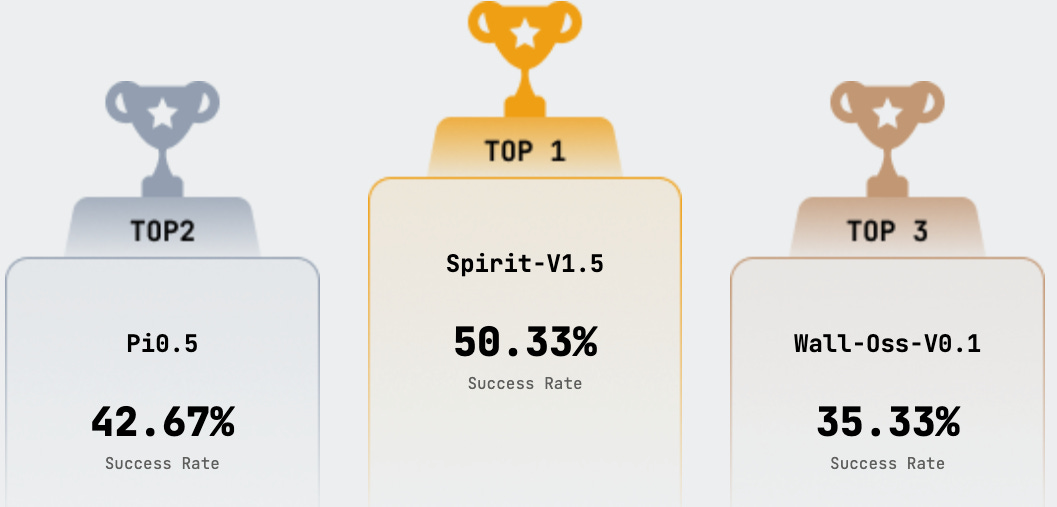
Messy, unstructured data is beating clean demonstrations in robotics. Spirit AI released a new state-of-the-art robot foundation model, now leading real-world manipulation benchmarks. The key insight isn’t architectural, but data-driven: models trained on open-ended, goal-driven interaction outperform those trained on carefully scripted demonstrations. Our takeaway is that physical intelligence scales through exposure to real-world chaos, not elegant curation, making data realism the true bottleneck
Robotics research is racing ahead of real-world deployment. There is a massive gap between what robots can do in labs and what survives production environments, where reliability, latency, and edge cases dominate. A system that succeeds 95% of the time in the lab can fail dozens of times per day at scale. Our take is that better models alone won’t close this gap; physical AI needs a new deployment layer focused on integration, safety, maintenance, and failure recovery, closer to DevOps and reliability engineering than academic robotics.
Crypto cards are quietly becoming the stablecoin distribution layer. New data shows crypto card volumes compounding faster than peer-to-peer stablecoin transfers, positioning cards as the main bridge between onchain dollars and everyday spending. While “direct stablecoin checkout” gets attention, cards already solve merchant acceptance, trust, credit, and UX. Our view is that stablecoins win by replacing settlement and balance sheets first, not consumer behavior, and cards are the infrastructure that makes that possible.

DeFi fund management is reverting to trust-me-bro governance. The status quo in DeFi is arguably worse than traditional finance: most “vaults” are just wrapped multisigs with unbounded execute functions, where a small set of unknown signers can move funds arbitrarily at any time. Even assuming good intent, this design makes operational failures inevitable. Our take is that this is clearly broken, but it also creates a large opportunity to rebuild asset management around constrained, auditable, code-native systems instead of manual control.
We’ll share another edition next week.