


Each week, we share a small collection of ideas, conversations, and artifacts that shaped our internal thinking. Inspired by experiments like USV’s Librarian, this series is powered by an AI assistant that helps synthesize recurring themes from our discussions, alongside our own reflections.
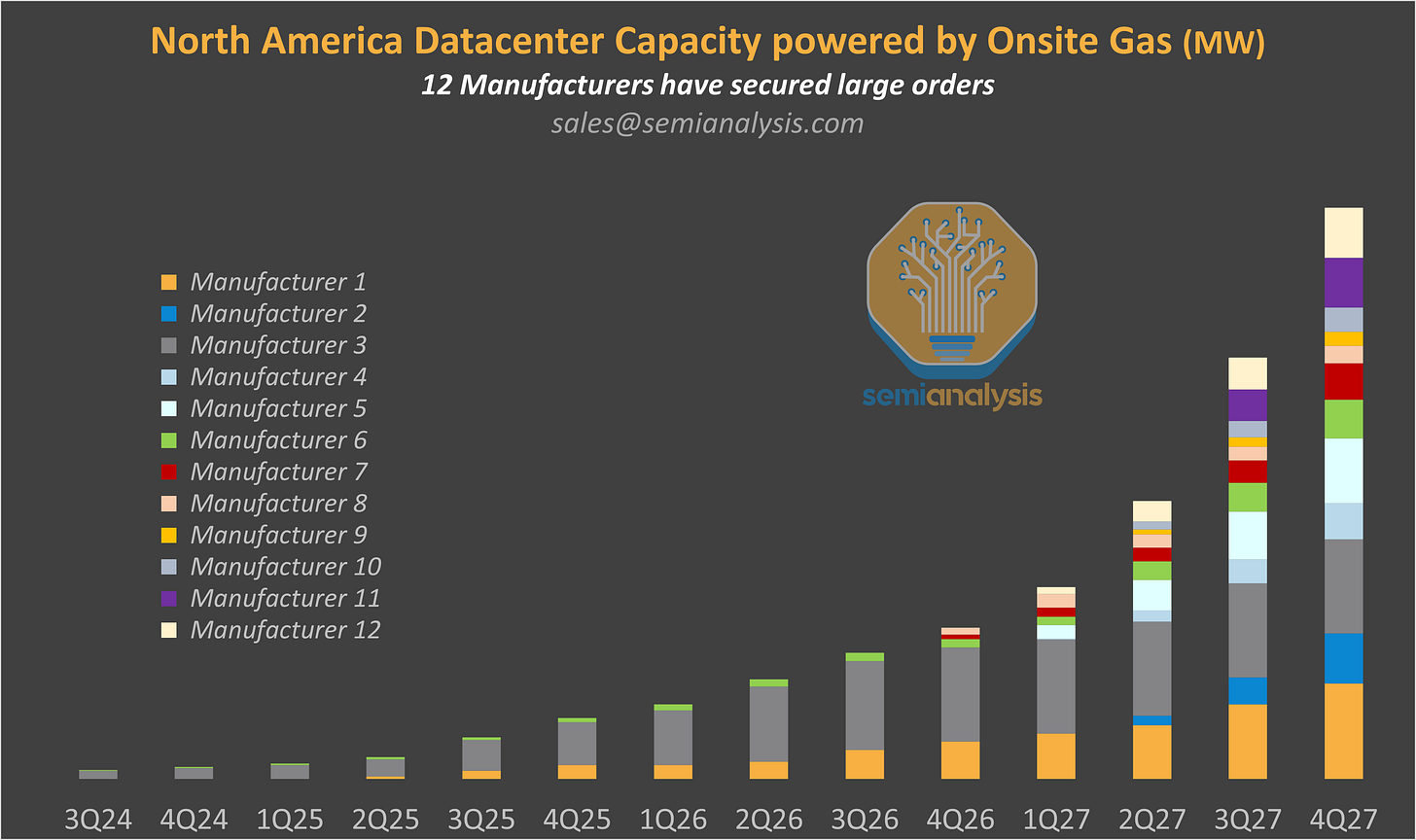
Speed to power is becoming a real moat. Hyperscalers are increasingly bypassing the electric grid and building on-site generation because the grid simply can’t move fast enough for AI timelines. Waiting months for power can translate into billions in lost compute capacity. Competitive advantage is shifting away from just models and chips toward execution in energy: who can source generation, navigate permitting, and operate reliable power at scale.
Physics-level efficiency may matter more than new models. New materials research from the University of Houston shows how ultra-thin dielectrics can reduce heat and energy loss inside AI chips, improving performance without scaling compute. Our takeaway is that incremental physics-level efficiency gains may matter more than novel architectures, because savings at the chip level compound across entire data centers. In an era where power is the constraint, physics quietly becomes the moat.
Scientific AI is converging on shared physical truth. MIT researchers found that high-performing scientific AI models, whether trained on text or 3D geometry, converge on remarkably similar internal representations of matter. Strong models appear to recover shared physical structure, while weaker ones break under distribution shift. We see this as both a promising evaluation signal and a hint that today’s fragmented protein, chemistry, and materials models may eventually collapse into unified “matter models.”


DeFi lending moats still live at the infrastructure layer. The prevailing narrative is that distribution and vault curation are the primary moats in DeFi lending, with base protocols becoming commoditized. Fee-level data suggests the opposite. Protocols like Aave still capture the majority of value because they control liquidity, pricing, and balance-sheet risk. Distribution matters, but the deepest moat remains infrastructure.
Prediction markets won’t scale as betting products. We’ve been debating what it would take for prediction markets to reach mainstream relevance. Our view is that they only truly scale once belief becomes a continuous, mark-to-market primitive, something you can trade, hedge, and reuse over time. Until then, prediction markets will remain niche and episodic rather than core financial infrastructure.
We’ll share another edition next week.