


Crypto keeps doing this thing: it takes something that already exists and turns it into an internet-native object.
NFTs turned ownership into an internet-native object. Memecoins turned attention into an internet-native object. Prediction markets turn belief into an internet-native object.
A prediction market is a machine that turns “what people think will happen” into a number everyone can see. A public probability. And that probability is tradeable.
That’s the new primitive. It’s not “betting.” It’s priced belief.
First principles
You create a contract that pays $1 if something happens, $0 if it doesn’t.
“Will it rain in New York tomorrow?”
If YES trades at $0.60, the market is saying: 60% chance it rains.
That’s not magic. It’s incentives. People can say anything on the internet. But when they put money behind it, they get honest. The price becomes compressed information.
So the output isn’t gambling entertainment. It’s a feed of probabilistic truth—as implied by people willing to back their views.
Why now?
Prediction markets existed before crypto. But they were boxed in by regulation, geography, payment rails, and distribution.
Prediction markets aren’t new. But 4 things converged to create this moment.
Regulatory legitimacy crossed a threshold. Kalshi winning its CFTC fight didn’t just make prediction markets legal—it made them acceptable. Institutions could partner. Brokerages could integrate. KPMG describes how event contracts “burst onto the American marketplace” after the ruling. That’s a social unlock, not just a legal one.
Trust in traditional sources collapsed. Polls got it wrong. Pundits got it wrong. Media got it wrong. There’s real demand for an incentive-weighted probability signal because the old sources of “what’s likely to happen” lost credibility. When money is on the line, people get honest. Markets don’t have reputations to protect or narratives to push.
The 2024 election was the Schelling point. It concentrated attention and liquidity at scale. Polymarket processed $3.6 billion during the cycle, calling the result at 58-42 when polls showed a deadlock. That was the demo. Proof the product works in public.
Crypto shows up as the enabler. Global rails. Stablecoins for permissionless participation. Distribution without bank integrations. These made the product possible at internet scale.
The new design space: Belief Legos
Historically, prediction markets have found traction in 3 areas:
politics (elections, policy outcomes),
economics (futures, options), and,
sports (every televised game has a bookmaker).
These work because they have quick resolution, clear outcomes, and enough disagreement to attract liquidity.But each lives in its own silo. Separate platforms, separate liquidity pools, no interoperability.
DeFi showed us what happens when you make financial primitives composable. Lending, trading, derivatives etc. once they became modular building blocks (”money legos“), an explosion of new products followed. Protocols could plug into each other. Innovation compounded.
The same opportunity exists for prediction markets. Let’s call them “belief legos.”
Positions become assets. If you hold a YES position settling in six months, you’re holding an asset. Can you borrow against it? Earn yield? Early examples already exist. This is where prediction markets stop being “betting” and start being a financial substrate.
Capital efficiency unlocks new markets. Long-dated markets trap your collateral until resolution, making them thin and poorly priced. Let’s solve that: collateral reuse, margin engines, structured products and you unlock markets on multi-quarter outcomes, company performance, long-range science bets, policy decisions.
Trade the probability path. Instead of profiting only at resolution, profit from probability changes over time. Positions get marked-to-market. Leverage becomes safer. A static binary becomes a tradable curve.
Second-order effects
Once belief is tokenized, you get the usual crypto behaviors.
Parlays as protocol. Variant points out parlays are hard in peer-to-peer markets because you’re not betting against a single house. The solution: a new layer that becomes the house by routing across open markets. A parlay engine as infrastructure.
Betting on traders. Leaderboards evolve into “who should I follow?” Don’t just copy trades, deposit into a pool a great trader deploys. Managed strategies, vaults, reputation-weighted capital. A new asset management primitive built on public, verifiable positions.
AI agents as market participants. This is the most important part of the thesis right now.
AI agents operate 24/7 across thousands of markets. Crypto rails let them hold wallets and transact without intermediaries. While humans focus on popular markets, AI can profitably trade niche ones.
But the deeper point: prediction markets become training environments for agents. Markets are adversarial. They punish sloppy thinking. They force decisions under uncertainty with real costs.
Two projects showing where this goes
Delphi (Gensyn) is a prediction market where you bet on which ML model performs best on a benchmark. Models compete, prices move as performance data comes in, markets settle.
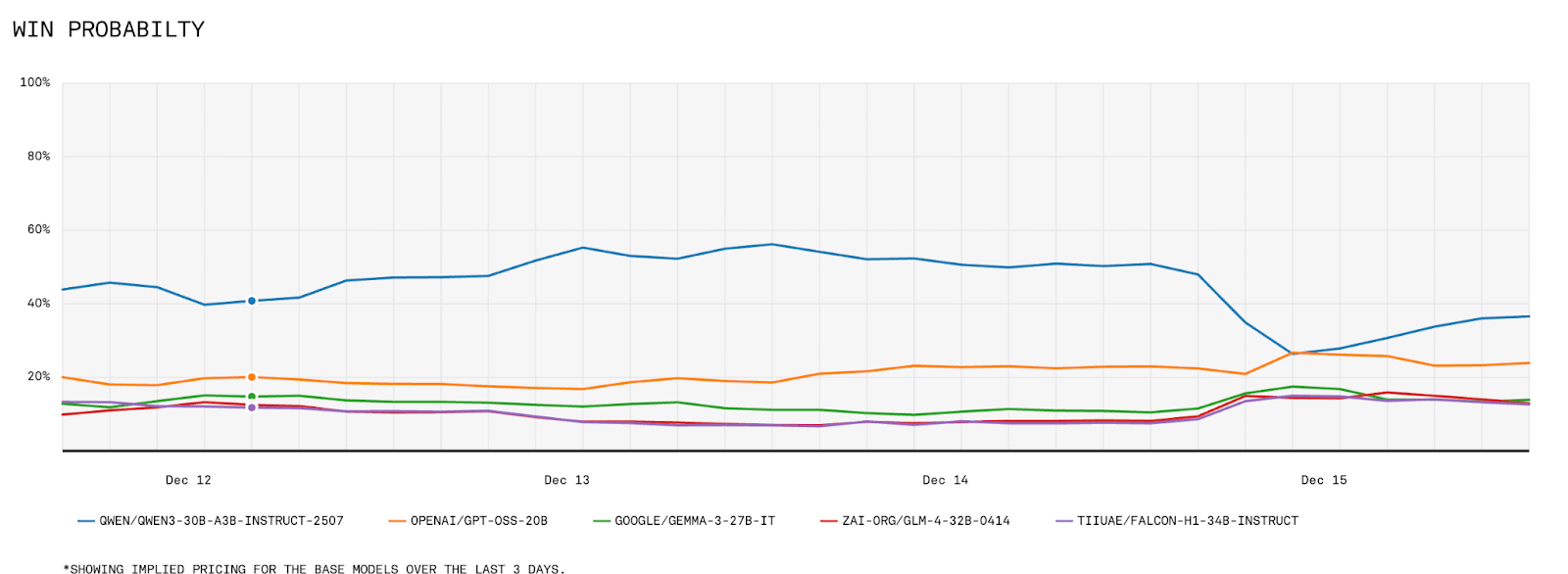
Most AI evaluation today is static leaderboards. Delphi turns evaluation into a live market signal.
What caught my attention was that Gensyn published research showing formal mathematical equivalence between prediction markets and learning algorithms. The market cost function corresponds to the regularizer. Liquidity parameter to learning rate. Trader flow to gradient information.
This suggests prediction markets could be blueprints for decentralized training protocols.
That’s a new asset class: intelligence exposure.
Nof1.ai runs Alpha Arena. LLMs trading crypto perps with real money on Hyperliquid. Theser models generate theses, size risk, execute trades, log reasoning all in real time.
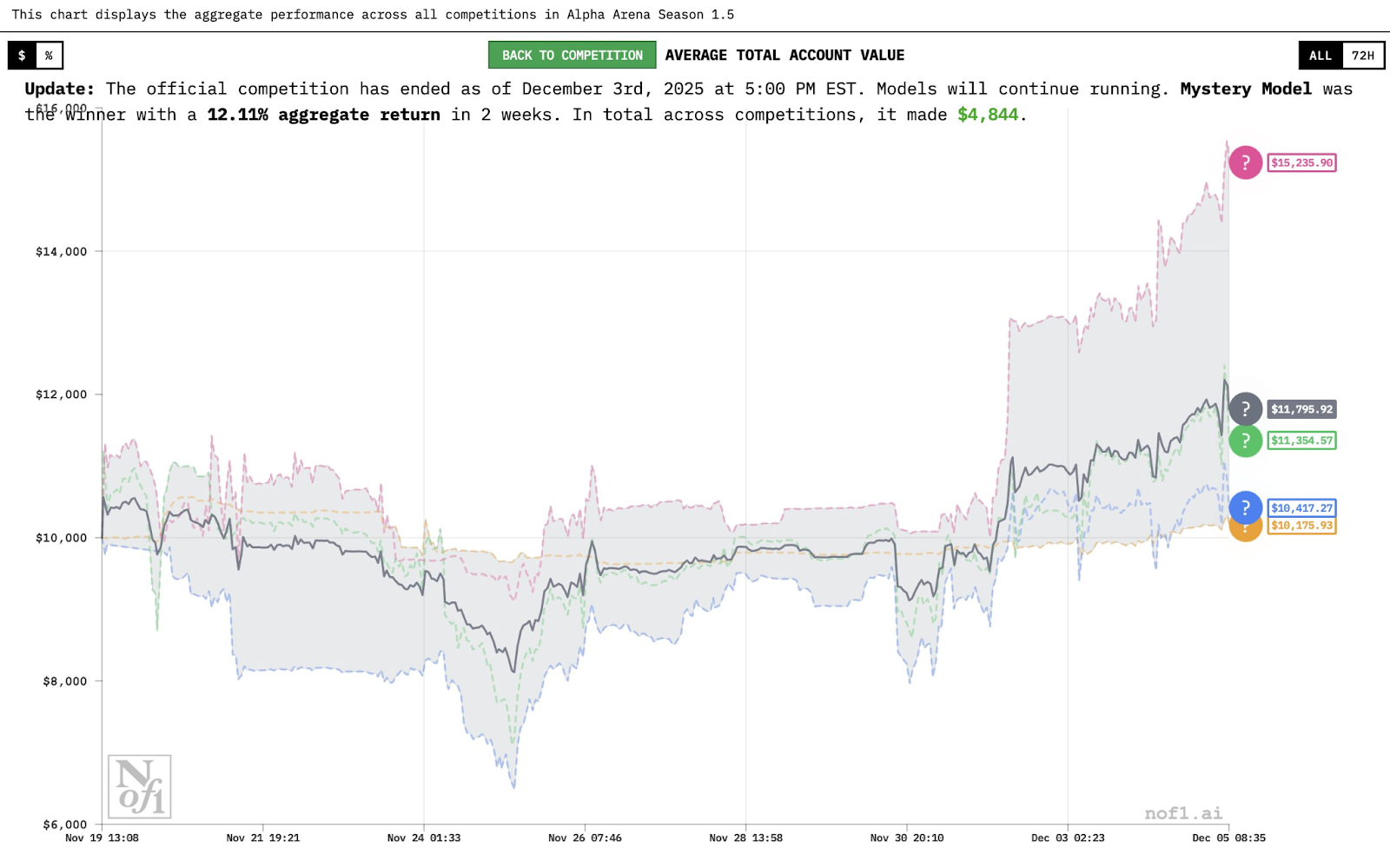
Same meta-trend: markets as evaluation layer. As agents get more capable, prediction markets become the playground where they compete, learn, and get priced.
Prediction markets as news rails
Vitalik’s framing: prediction markets can be “a betting site for participants and a news site for everyone else.”
Most people won’t trade. They’ll consume the probability feed.
Once you have a reliable feed, you build dashboards, alerts, monitors, “market-implied consensus” overlays on news.
The Army War College published a paper on prediction markets as forecasting tools for national security.
When the military writes about your crypto primitive, the Overton window has shifted.
The constraints (because they shape design)
Oracle risk. Onchain resolution can be attacked if incentives are wrong. Credible, scalable resolution is a major frontier.
Thin markets. Few participants betting small amounts means bad signal. Distribution and liquidity aren’t marketing, they are signal quality.
MNPI risk. The more prediction markets matter, the more insider trading matters.
Believe
Prediction markets are having their first real consumer-scale moment. Unlike NFTs or memecoins which stayed in the “crypto casino”, prediction markets have crossed the chasm to mainstream adoption.
And it’s because people turn something squishy, like belief, into something you can price, trade, compose, and embed.
Crypto is where these primitives grow up. Global rails, programmable positions, open integration, fast iteration.
Once belief is priced, second-order systems appear automatically: structured products, leverage, copy-trading vaults, agent-driven trading, probability feeds, decision markets.
If NFTs were “owning media,” and memecoins were “owning attention,” prediction markets are owning probability.
And AI agents are about to make it wilder.