
I met Somi back in 2023, when he was wrapping up his PhD at UT Austin under Prof. Sandeep Chinchali. There was no company but the initiative they were experimenting with was called “GeneSys”, and they were using AI to test complex, high-stakes production systems.
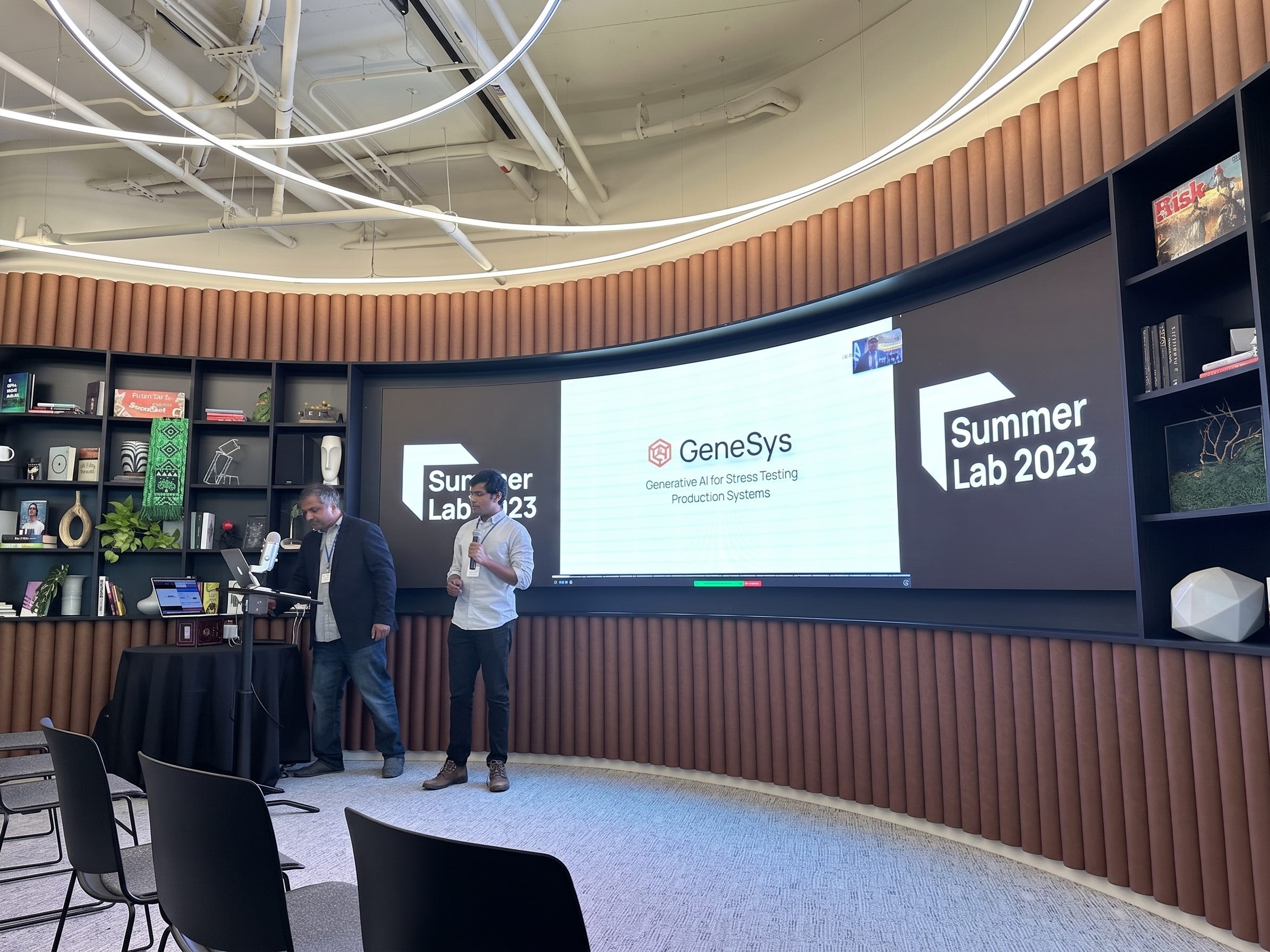
Over the next few months I spent a lot of time with Somi and Sandeep as the vision for Synthefy came together. Later that year, Canonical had written the first check as the only investor in their pre-seed, and we started meeting every week.
The idea they landed on was simple, driven by a core thesis:
the market for “number tokens” is bigger than text tokens.
Most of the data that runs the economy lives in tables and time series: transactions, prices, sensor readings, inventory, customer histories. Predictions made from that data decide which payments get approved, how products get priced and stocked, which customers leave, and when machines fail.
And the way companies make those predictions has barely changed in a decade. Every workflow is a custom project: clean the data, engineer features, train a model, tune it, deploy it, maintain it forever. The Synthefy team lived this at Uber’s self-driving unit, where dozens of people spent 5-6 months building a single model. A production system can cost $500K-$1.5M to build and up to $750K a year to keep running.
The team believed pretraining would do for numbers what it did for language: one model, trained on huge amounts of structured data, that makes accurate predictions on a table it has never seen. Six months of ML work becomes an API call.
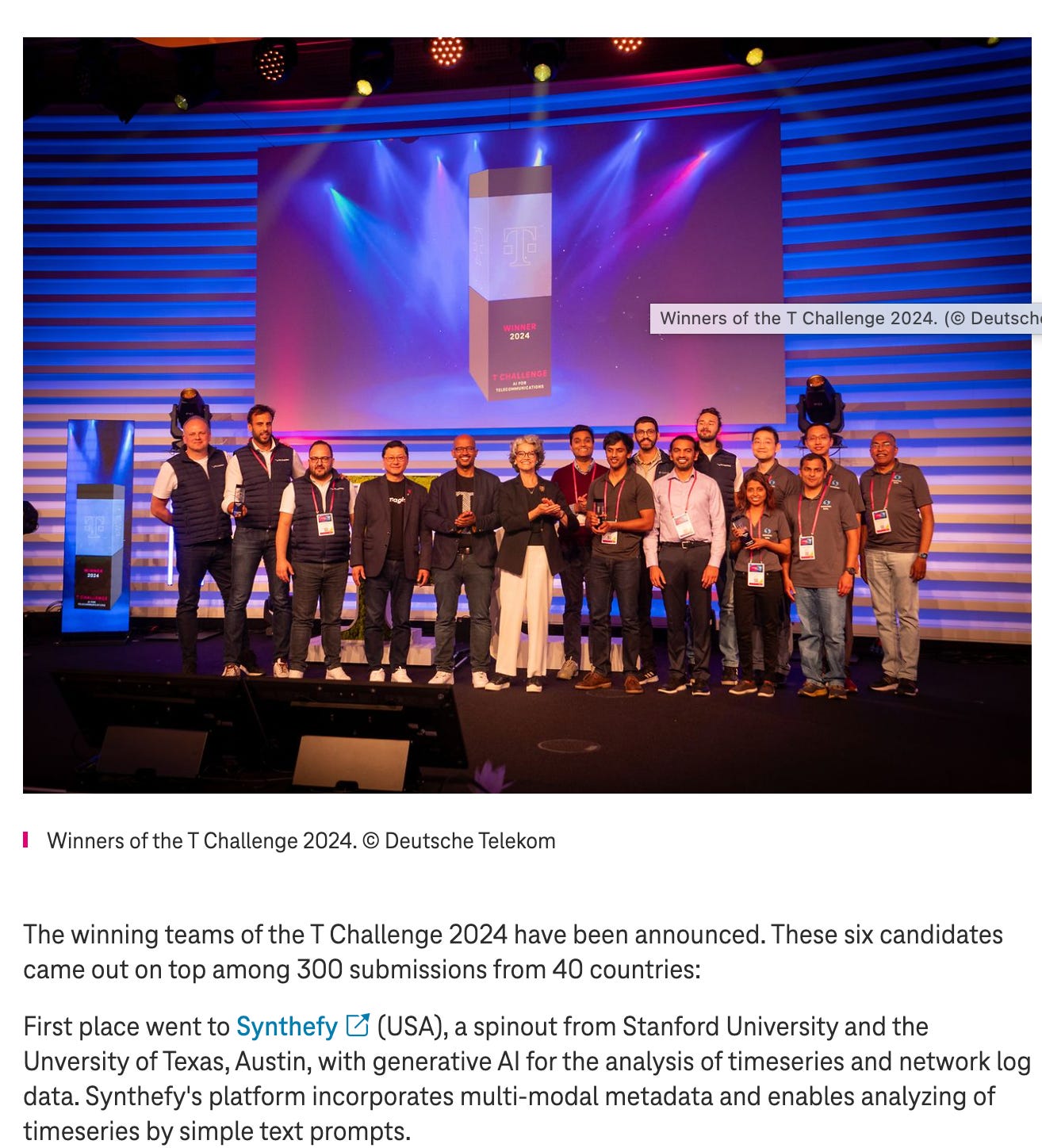
The path from there looked like most good pre-seed paths, which is to say ‘quiet’. First MVP in early 2024, pointed at defense and telecom workloads. Deutsche Telekom named them best AI startup.
Through 2025 Synthefy stayed heads down: deployments at enterprises like GoodRx, Schneider Electric, and a US Army contract, while the rest of the market has been chasing text, images & videos through LLMs.
Then the market turned, fast. In May, SAP agreed to acquire Prior Labs, an 18-month-old German lab that had raised €9M, and committed over €1B to build on it. In June, Nvidia bought Kumo for a reported $400M. Two of the largest companies on earth paid up for the category within 30 days of each other.
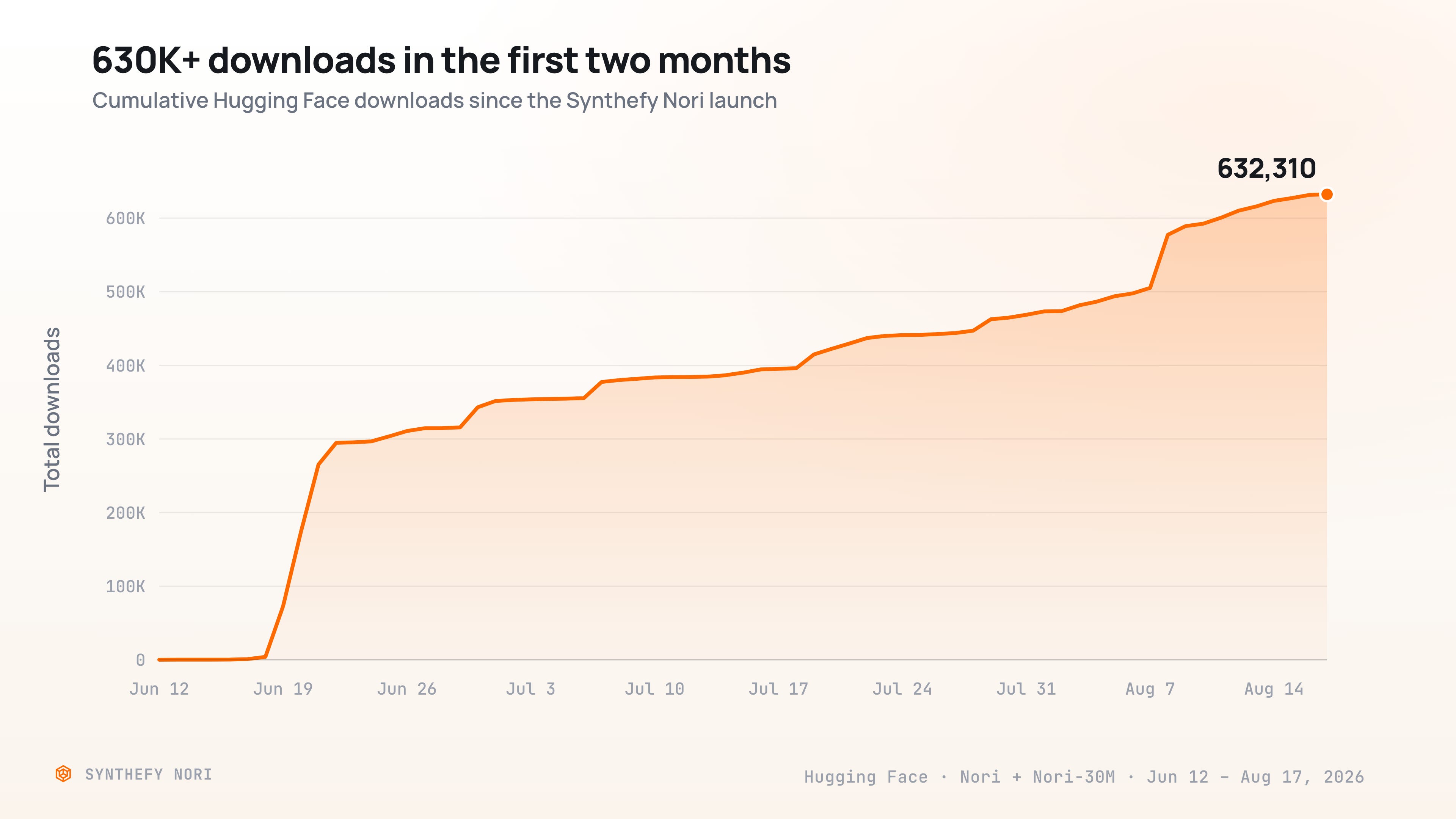
Weeks later, Synthefy shipped Nori. It ranks #1 for accuracy on a public benchmark of 96 datasets, ahead of Google’s TabFM and the TabPFN model SAP had just bought and remarkably, it does it with just 6M parameters, a tenth the size of comparable models. It crossed 440K downloads in its first 30 days, and recently surpassed 630K downloads.
In pilots, it beat forecasting systems customers had spent years tuning, with no custom training.
Today Synthefy announces its seed round, led by Wing with Haystack, Canonical, Samsung Next, plus angels including Srinivas Narayanan (ex-CTO at OpenAI), Aparna Chennapragada (CPO at Microsoft), and Manohar Paluri (VP of AI at Meta).
Congrats, Somi and team. The economy’s numbers finally have their foundation model!
PS: One note on sourcing, because people ask how a team like ours finds Somi and Sandeep. The best pre-seed deals rarely look like “deals.” They look like research: no deck, no go-to-market plan, sometimes no graduation date. Our job is to be in the lab while the conversation is still “could this be a company,” and to be useful.