
There’s a small boutique on Union Street in Cow Hollow called Andon Market. From the outside, it looks like any upscale SF boutique. Granola, candles, artisanal chocolate. But if you want to check out, you pick up a corded phone on the counter and talk to Luna, the store’s manager. Luna is an AI agent.
Luna does almost everything. She sourced the products, negotiated with suppliers, set the prices, hired the painters for the mural, and ran the phone interviews to hire the two human employees who actually run the floor.
Why does she need them? Because general-purpose robotics isn’t quite there yet.
The gap is hands
Luna can hire, price, source, negotiate, and schedule. What she cannot do is restock a shelf, sweep a floor, or take a delivery off a truck. The cognitive layer of running a physical business is roughly solved. The physical layer is not.
Now imagine the next version of that store. Luna is still the brain, but instead of human employees, affordable robotic arms handle the physical labor. Frontier labs are racing the cost of the cognitive model toward zero. The bottleneck moves entirely to hardware, who can put a reliable, deployable arm next to that digital brain.
Multiply that pattern across every packing line, logistics bay, and commercial back-of-house in the country. You’re staring at a global labor-spend pool that dwarfs SaaS by roughly 30x.
That’s the wedge our portfolio company Robo is going after.
Why this time is actually different
2 things have shifted under the surface:
Scaling laws hold in robotics: More tele-operation hours in, lower model loss out. Fleets backed by remote operators are doing economically real work today, allowing startups to deploy immediately and ramp human intervention down as autonomy goes up.
The macro stakes are higher: The hurdles are real. Most manipulation models sit in the 80–90% success range, and the US infrastructure layer is paper thin. China installed roughly 295K industrial robots last year. The US installed about 34K. That 10x supply gap is a strategic vulnerability. Because hardware is brutally hard to scale, most robotics startups die in the supply chain.
Where Robo fits
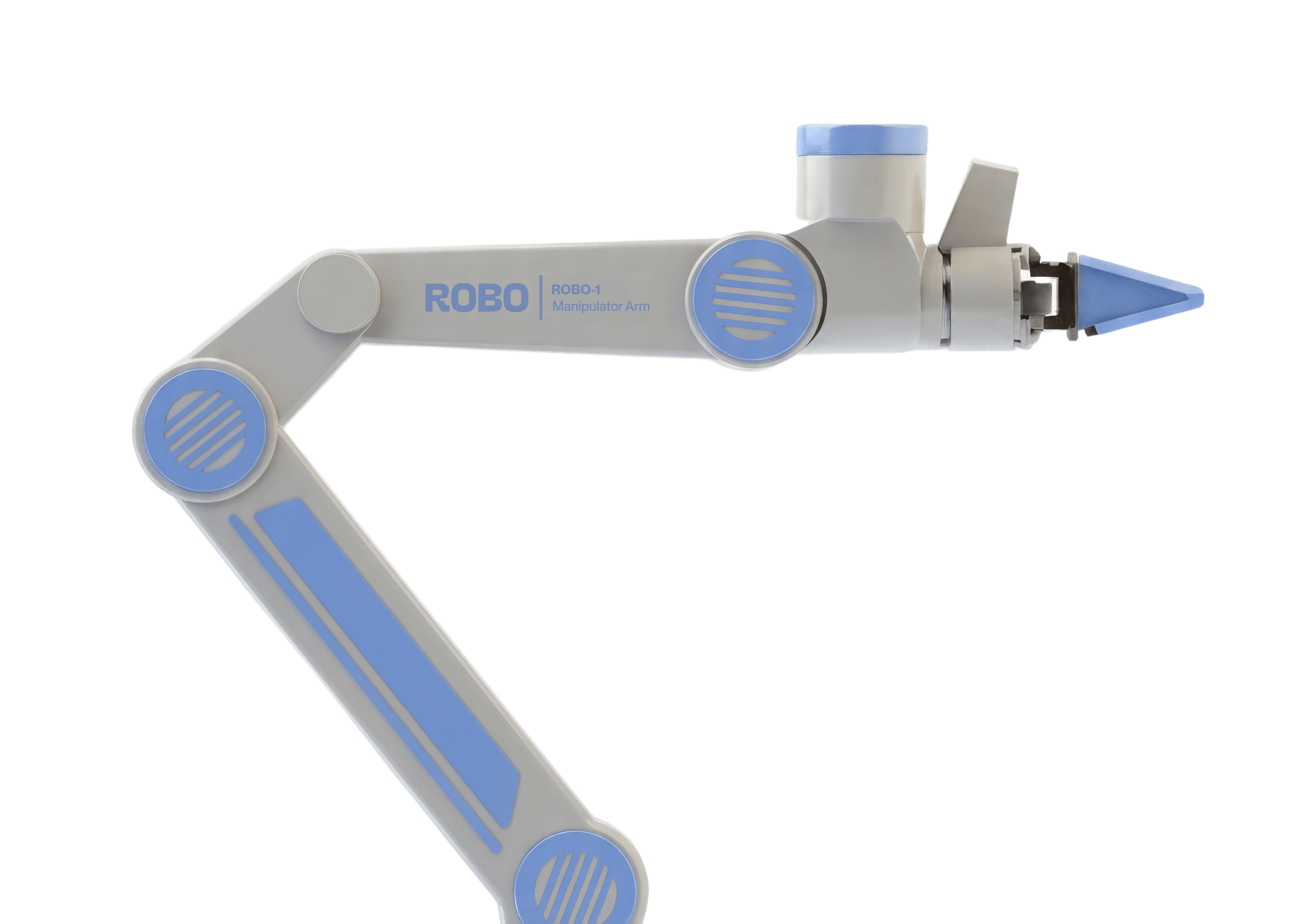
Robo builds affordable robotic arms designed so the arms can eventually build more of themselves (see our earlier post about Robotic Superintelligence) to force down unit economics. They run a dual GTM on identical hardware:
They sell arms ($2,500/unit): The lowest cost in the category for this payload-to-precision ratio. AI labs buy them for mass data collection; developers buy them to build on. To accelerate adoption, the low-level stack is open-source.
They deploy arms (Robot-as-a-Service): They walk into high-volume industrial lines (like food packing), set up the hardware, and provide end-to-end tele-op coverage. Customers pay by the hour with zero CapEx. When the model stumbles, a remote human takes over instantly so the line never stops.
This dual motion creates a closed data flywheel. They own both ends: the labs training the models, and the physical floors where those models accumulate real-world hours.
Velocity
In January, the company was just a pegboard, two arms, and simulation software.
5 months later, they have redesigned the arms with a domestic sheet-metal core, scaled an in-house print farm for outer shells, secured ~100 preorders, and gone live with their first deployment.
Crucially, their domestic architecture is engineered to transition into sealed, cleanroom-ready variants. A US-built arm capable of meeting strict pharma and medical specs avoids the shifting regulatory hurdles that plague Chinese-manufactured alternatives.
What I come back to
There’s a version of this company that tried to do humanoids, or build a foundation model, or sell pure software. Instead, they picked the most boring-sounding piece of the stack - affordable hardware and deployment infrastructure, and executed with unusual clarity.
Luna at Andon Market can run a store, but she cannot yet stock her own shelves. Someone has to build the arm that does that, in volume, for a price a corner-store economic model can absorb.
Reach out to Robo if you need some US-homegrown robotic arms that are quick and cost-effective.

yeah, the money is obviously flowing toward "things that work without humans touching them". but then you realize that half the founders we talk to are still pitching augmentation. like "our ai helps you do X better"